






















Socialization Simplified: Why Homeschool Families Are More Connected Than Ever
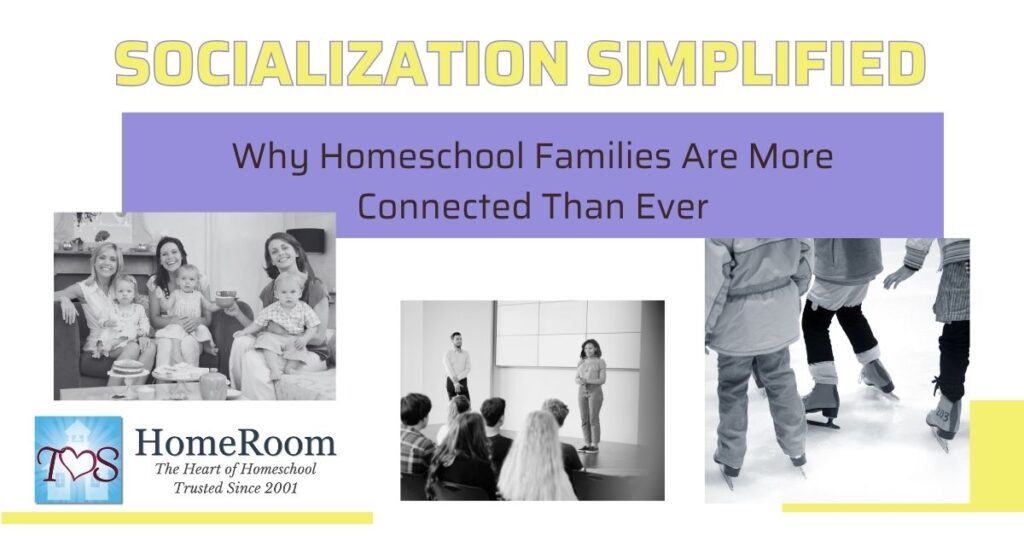
If there’s one question nearly every homeschool parent hears, it’s this: “But what about socialization?” For decades, the myth has lingered that children who learn at home somehow miss out socially—isolated, disconnected, or lacking opportunities to build friendships. But when we look at real homeschool families and the diverse communities they build, the myth quickly crumbles.
Finding Support in Online Communities
Homeschooling doesn’t limit a child’s ability to socialize; it simply shifts the context of socialization. Instead of classrooms limited by age, schedule, or geography, homeschoolers often interact across multiple age levels, participate in real-world activities, and form friendships through intentional community—both in-person and online. From church groups and co-ops to sports, theater, and service projects, homeschool students regularly engage in deeper and more meaningful social settings than many realize.
But today’s homeschoolers have an even stronger tool for connection: online networks designed specifically for homeschooling families. Through online platforms—like Homeschooling.social—homeschool families can connect, organize events, and build community even without traditional school-based networks. It is now easier than ever to find local groups, plan meetups, share resources, and build supportive relationships that extend far beyond a single neighborhood. For new or isolated families especially, these virtual spaces can become a lifeline—offering encouragement, belonging, and practical community at the click of a button.
Moreover, a growing body of research argues that homeschooling doesn’t inherently stunt social development—and in many cases may provide advantages. Homeschooled children often engage in clubs, community service, co-ops, sports, arts, and other group activities.
In short: socialization isn’t a “school hall, lunch-room, and recess only” concept. It’s about connection, interaction, and community—and homeschooling families who actively seek out groups, shared activities, and supportive networks often see rich social outcomes that defy the stereotype of isolation.
Below is a quick FAQ to help debunk common socialization concerns and remind you that homeschoolers are anything but alone:
Homeschooling & Socialization: Quick FAQ
| Q | A |
| Do homeschoolers struggle with socialization? | Not when families intentionally build community—online or in person. Homeschoolers often enjoy rich, varied social lives. |
| How do they make friends? | Through co-ops, church groups, extracurriculars, neighborhood connections, online platforms, and local homeschool events. |
| Are homeschooled kids “isolated”? | Not typically. Many engage with a wider age range and more community activities than traditionally schooled peers. |
| Can online groups really help? | Absolutely. Virtual networks connect families, spark local meetups, and support parents who need friendship and community. |
Ready to learn how Homeschooling.social is helping families find real community? Read the full evaluation here.
Looking for More?
Listen to Episode 11: The Socialization Myth Debunked of the Hey, Mama! Homeschool Show.
Listen to Episode 63: Myth Busters: Socialization and Isolation of the Hey, Mama! Homeschool Show.
Read more in Proper Socialization? Homeschoolers Win! in The Homeschool Minute.
Read about socialization and competition in Pursuing the Socialization Backwardness.
TOS HomeRoom Author
This introductory article has been written by Kristen Heider. She is the Director of Marketing for The Old Schoolhouse®. She shares more about her family’s homeschooling journey at A Mom’s Quest Teach.
Don't Miss These!
-
 Read more +
April 23, 2026 By Shelby in * Teaching Methods, Uncategorized
Read more +
April 23, 2026 By Shelby in * Teaching Methods, Uncategorized
Learn Latin through Daily Practice
-
 Read more +
March 26, 2026 By Lisa in * Teaching Methods
Read more +
March 26, 2026 By Lisa in * Teaching Methods
Free Worksheets for Kids: A Time-Saving Learning Resource for Homeschool Families
-
 Read more +
March 12, 2026 By Lisa in * Teaching Methods
Read more +
March 12, 2026 By Lisa in * Teaching Methods
What is an Eclectic Education?
From Our Sponsors



































"Train up a child in the way he should go and when he is old, he will not depart from it" (Proverbs 22:6).
